Cautious of the Cliff

I believe in being cutting-edge! Finding modern ways to express the old path; that is cutting-edge and culturally relevant biblically. I want to be liberal enough to use new ways and conservative enough to stick with God’s solid, specific path.

Changing apostolic doctrine to accommodate the times is dangerous and not merely on the edge; it’s totally over it.  It is unwise, senseless, ill-advised, and thoughtless. That’s not cutting-edge. That’s a cliff-hanger, at best.

I need to share a secret. It’s personal. It’s frightening. But, after all, blogs are meant to be revealing and personal. Blogs are like one’s personal diary in cyberspace. Let me get to the point. I’m terrified of heights. No cliff-hanging, diving off a mountain into the ocean, tight-rope walking, for me. None! Zilch! Ferris wheels are out of the picture. I’m not going up in the arch in St. Louis. I used to be terrified of walking across the bridge or those see-through glass-looking floors on the third floor of the mall. I’ve overcome my fear by simply staying away from what makes me fearful. Hopefully that makes me an overcomer.

In a spiritual sense I’m even more fearful of falling off some spiritual cliff. My heavenly flight will happen so fast I won’t even realize it. Anyways, I will be changed in a twinkling of an eye, and my fear of heights will be zapped for eternity.

It’s not the fear of going up that is dreadful. It’s the fear of abandoning truth for a lie that causes me and those that hear me to go down, down, down; if you know what I mean!

A wealthy lady interviewed three men for a driving position. She asked “How close can you get to the edge of the cliff without falling off?”

First guy: “Twelve inches.”

Second guy: “Six inches”

Third guy: “I’ll stay as far from the cliff as I can.”

He got the job.

Mark Wilson said, “When staying close to the cliff appeals more to us than staying close to Christ, we are trying to manage sin. Spiritual victory is never found along the fuzzy edges of compromise. God calls us to steer clear of the cliff altogether.”

False teachers are not only close to the cliff, they have fallen of the cliff.

My advice for one and all: Be cautious of the cliff!

photo credit: Jan Egil Kristiansen via photo pin cc
Counterfeit Communicators

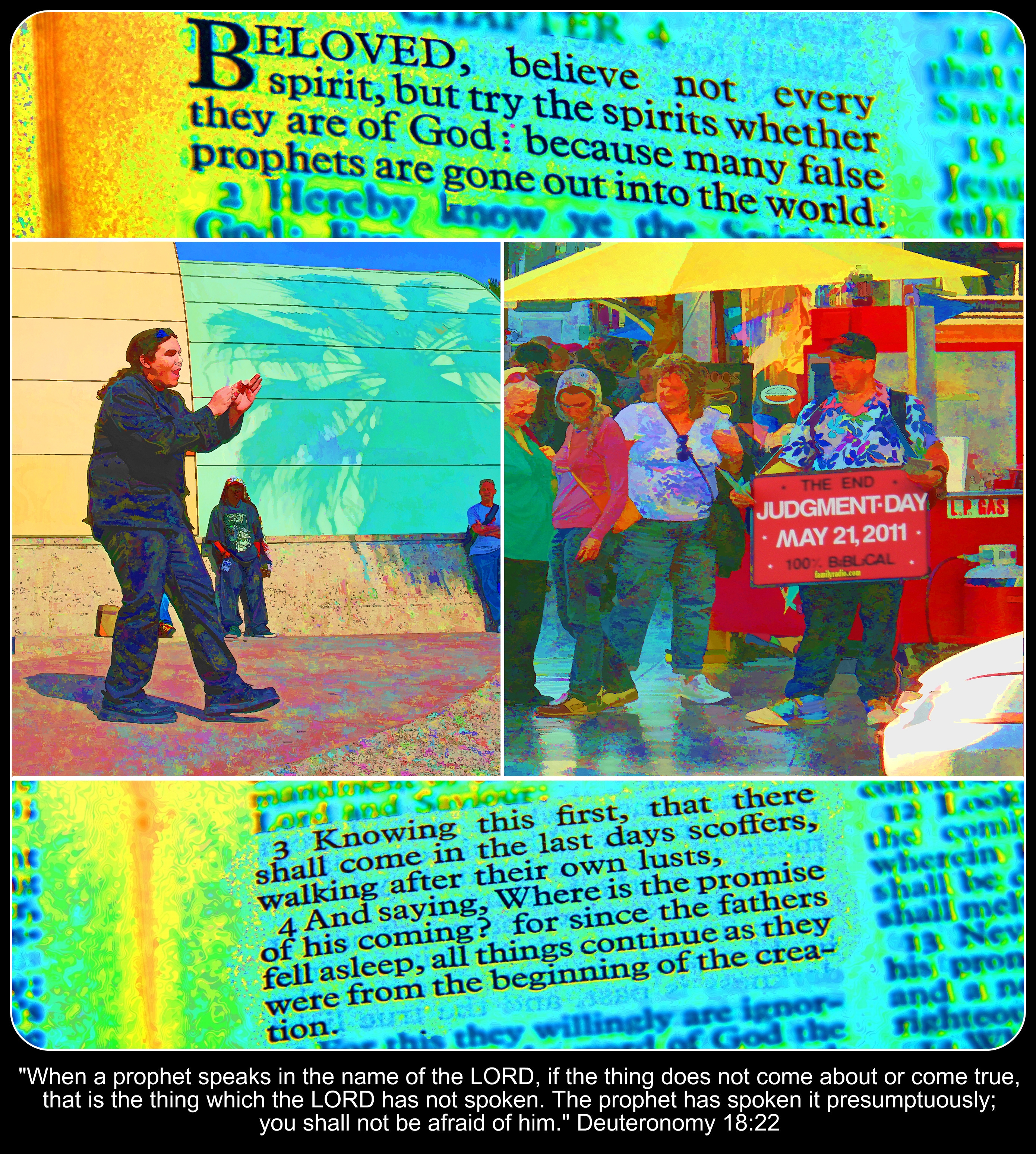
Jude and Peter join forces to use similar phrases when captivating our attention concerning counterfeit communicators.

Various words come to mind when I think of counterfeit.

  1. Phony
  2. Fake
  3. Imitation (of something genuine)
  4. Insincere
  5. False
  6. Deceptive (made in imitation of something else with intent to deceive)
  7. Forged
  8. Bogus
  9. Sham
  10. Unauthentic
  11. Fraud
  12. Artificial
  13. Unreal
  14. Manufactured
  15. Fabricated
  16. Scam
  17. Swindler
  18. Truth-twisters
  19. Hucksters

Everyone has experienced that violated, irritated, felling when experiencing a person encounter with a counterfeit. Chances are anyone reading this has been victimized by a con artist, perhaps, more than once. Most have received one of those “too-good-to-be-true” e-mails from a far-flung corner of Africa promising an inheritance of millions in exchange for a bank account number and a minimal collection fee. Let me say up front a rule of thumb is if it sounds “too-good-to-be-true” it probably is.

What is the purpose of a counterfeit product?

  1. To imitate something
  2. Produced with the intent to take advantage of the superior value of the imitated product.

Of all the con artists in the world, the most damaging and dangerous are those that deal with religious and Christian deception. Charles Swindoll says that they appear “resourceful and real” but are “empty and deceitful” and offer “alluring alternatives” to the truth. He goes on, “Pretending to proclaim reliable information, they use the same words as believers but they are empty and deceitful. Claiming to offer answers and hope, they bring lies and despair.”

According to 2 Peter 2 false teachers:

  1. Deceitfully present heresy;
  2. Openly deny the truth;
  3. Unashamedly model and teach ruinous, destructive, injurious, harmful ways.
    a. Selfishly drowning in greed; changing doctrine to pad their bank accounts (2:3) More concerned with “nickels and noses.” (Mark O. Wilson).

These false teachers will be destroyed. Peter cites three OT examples to prove it:

  1. The angels that sinned and are now imprisoned in Tartarus (which is the meaning of the word translated “hell”);
  2. The world before the flood(Noah);
  3. The cities of Sodom and Gomorrah.

In each of these cases, the persons involved had a form of religion but not the true faith that empowers the life (2 Timothy 3:5).

Before Christ comes back, there will be a great deal of “religion” in the world, but it will not be true faith in Him. Peter also points out that God is able to preserve and deliver His true saints, as He did with Noah and his family, and Lot. Let’s stay true! It’s the least we can do!

photo credit: Chris Yarzab via photo pin cc

Enhanced by Zemanta

Time To Stop, Drop, and Obey God’s Word

A story is told from Japan of a man who inherited a sacred stone from his father. His father had received the stone from his father and his father before him. The sacred stone had been in the family for many years. It was kept in a place of honor and highly valued. Even though the man did not really understand the reason for the stone, he believed in the tradition.

One day the man was taking a trip across the ocean in a boat. A storm arose. The boat began to toss and then sink. The man had several belongings with him and had to choose which he would try to save. He chose the sacred stone. However, as soon as he entered the water, he began to sink. He could not swim hard enough to get his head above the water. He sank deeper and deeper and knew he was about to drown. A decision had to be made. He thought, “Do I hold onto the stone and die, or do I let go and live?” He quickly concluded that living was more important than the sacred stone. The man dropped the stone into the deep and quickly swam to the surface. As he broke through the surface, he breathed in deeply and knew that he had made the right choice. Life is more important than a tradition that will only weigh you down and finally bring death. We must be careful that we never hold traditions more sacred than the Word of God.

“Let us lay aside every weight, and the sin which doth so easily beset us, and let us run with patience the race that is set before us” (Hebrews 12:1)

Is there anything in my life that I hold as sacred that the Bible tells me to drop and walk away from?

photo credit: looseends via photo pin cc

The Tragedy of Misdirecting Souls

A story is told of a terrible storm that was raging across the eastern part of the United States, making the progress of the train difficult. Among the passengers was a woman with a child, who was concerned lest she get off at the wrong station. A gentleman, seeing her anxiety, said: “Do not worry, I know the road well, and I will tell you when you come to your station.”

In due course the train stopped at the station before the one at which the woman wanted to get off.

“The next station will be yours,” said the gentleman.

As they went on, in a few minutes the train stopped.

“Now is your turn, Madam. Get out quickly!”

The woman took up the child and thanking the man, she left the train.  At the next stop, the brakeman called out the name of the station where the woman had wished to get off.

“You have already stopped at this station,” called the man to the brakeman.

“No sir,” he replied, “something was wrong with the engine, and we stopped for a few moments to repair it!”

“Oh, no” cried the other man, “I put that woman off in the storm when the train stopped between stations.

As they went back they found the lady dead (frozen to death in the storm) with the child lifeless in her arms.  It was the mistake of wrong directions being given.

Still more terrible is the result of misdirecting souls.  We must preach the original salvation message given to Peter in Acts 2:38:

“Then Peter said unto them, Repent, and be baptized every one of you in the name of Jesus Christ, for the remission of sins, and ye shall receive the gift of the Holy Ghost.”

photo credit: jvc via photo pin cc

Do You Have Branches or Roots?

Doctrines become roots in our lives. They provide us with a strong anchor. No one wants to be a tree without roots, or a house built on the sand.

People, churches, and organizations can drift from the truth. One man made a remark to a friend that a Christian college was now teaching all the branches of learning.

His young friend responded, “Yes, it now has all of the branches and none of the roots.”

It is possible to teach and preach things that are only branches of the tree—non-essential but what people like to hear. It is imperative to preach on subjects that are roots and anchors of Christianity.

“If ye continue in the faith grounded and settled, and be not moved away from the hope of the gospel, which ye have heard, and which was preached to every creature which is under heaven; whereof I Paul am made a minister” (Colossians 1:23).

Enhanced by Zemanta