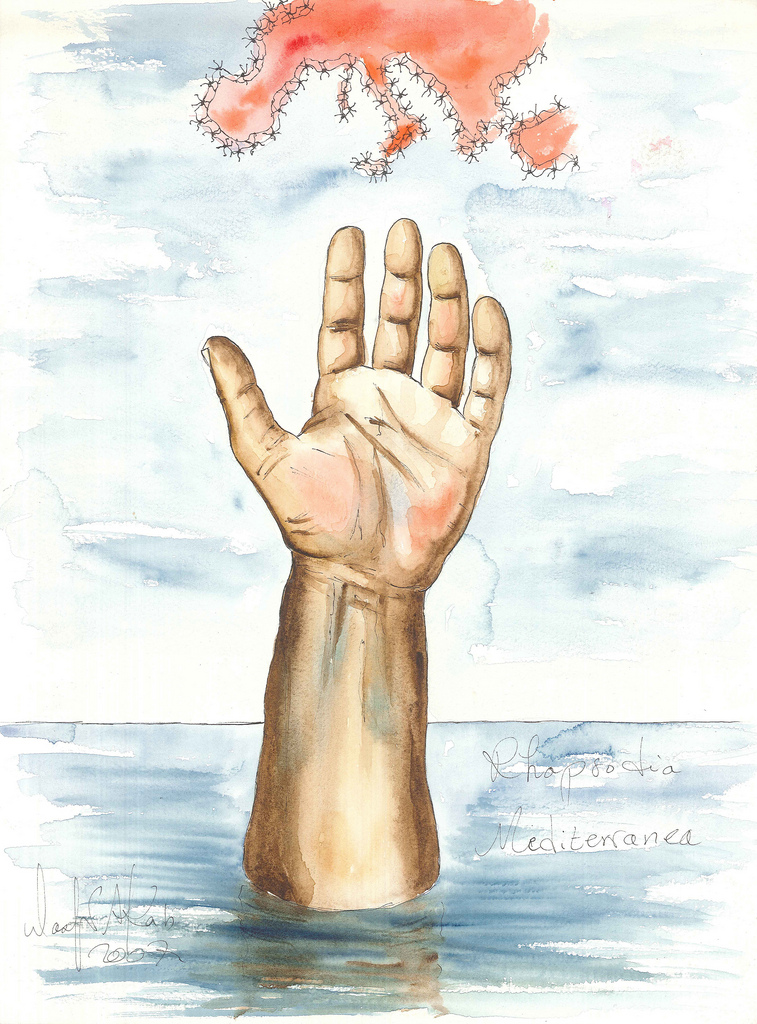
The Tragedy of Ignoring the Alarm

Howard Hendricks in Color Outside the Lines gives an excellent illustration of what can happen to those who refuse to heed advice. A boat made its way toward its destination. On board were 1,358 people enjoying an afternoon outing. Thirty minutes after leaving the shore, a fire broke out. People started shouting, fearing their lives would be lost. Although the ship was close to shore, the captain steadily kept his course. No one knows why he did not return to land for help. Some say he did not understand the severity of what was taking place. Others say he thought the crew could take care of the situation. He refused to pay attention to the fire alarms, the screaming people, or the smoke and flames. The tragedy resulted in the loss of over a thousand lives. Investigations revealed the crew was unskillful and inspectors had been bribed. Fire buckets had been filled with garbage, and life vests had rotted.

“How shall we escape, if we neglect so great salvation; which at the first began to be spoken by the Lord, and was confirmed unto us by them that heard him” (Hebrews 2:3).

  • God sees sin.
  • God sees the sinner.
  • God judges sin and sinners.
  • He provides only one way of escape (salvation).

The Bible is very clear that there are only two kinds of people (both in life and in death). (See Romans 3:9-31; 6.) They are

  • Saved
  • Lost

“Instead of worrying about how limited it sounds to have only one way, we should be saying, “Thank you, God, for providing a sure way to get to you!”
(Acts Commentary)

photo credit: flattop341 via photo pin cc

The Question Hasn’t Changed Why Should The Answer?

The Question Asked:

“Men and brethren, what shall we do?” (Acts 2:37).

The Answer Given:

“Then Peter said unto them, Repent, and be baptized every one of you in the name of Jesus Christ for the remission of sins, and ye shall receive the gift of the Holy Ghost” (Acts 2:38).

If someone in your church were to ask this same question, would he receive the same answer?

If the question hasn’t changed why should the answer?

Rescued Never to Drown Again

We need to be like the man who was drowning in the ocean.  A ship passing by threw out the lifeline to him; he grabbed it and was pulled into the ship (the place of safety).  Once on the vessel the ship’s crew encouraged him to let go of the lifeline.  He continued to grasp tightly the rope and refused to let it go.

The captain pleaded, “You are now safe.  Let go of the rope.”  The man persistently refused.

Again he pleaded, this time trying to loosen the man’s grip on the rope.  The man fought back adamantly and said, “I will not let it go.  When I grabbed onto this rope I grabbed it for life.”

You and I were also sinking in sin (Psalm 40:2) and were brought by the Great Rescuer, Jesus Christ, into the ship.  How can we let go of the lifeline now?  We must remain in the ship in order to be saved. (Acts 27:31)

In Hebrews 2:1-3 we are warned against drifting away from the faith.  As believers allowing the gospel to slip away from us we find ourselves drifting downstream and having no anchor (Hebrews 6:19) to hold us secure.  We have, through neglect, let go of the lifeline.

“Therefore we ought to give the more earnest heed to the things which we have heard, lest at any time we should let them slip. How shall we escape if we neglect so great salvation…” (Hebrews 2:1,3)

Enhanced by Zemanta

O Taste and See that the Lord is Good

Perhaps, you have not been taught any type of Christian tradition. Maybe you have not been searching for answers to, “What must I do to be saved?” You may have even had bad experiences with churches and so-called Christians. This story is for you.

A farmer had an orchard of orange trees. His friend came to visit one day, and the farmer offered him one of his oranges to refresh him. The farmer was surprised when his friend refused to eat one of his oranges. This had happened on one other occasion, and it provoked the farmer to ask, “Why don’t you ever want to eat one of my oranges?”

His friend hesitantly responded, “I really don’t like your oranges.”

The farmer asked, “What is wrong with my oranges?”

The friend answered, “They are very bitter!”

The farmer looked at him with a puzzled look and asked, “When have you eaten one?”

He responded, “One day I picked one of your oranges, at the edge of the orchard, close to the road. I found it to be very unpleasant.”

The farmer roared in laughter. He explained, “The trees that I planted at the edge of the orchard are indeed bitter. I did this on purpose to discourage the children from stealing the oranges. However, the trees in the middle of the orchard are very good and produce a very sweet fruit. You just needed to come into the orchard, pick an orange, eat and enjoy.”

Many times a person on the edge of accepting the truth of Christianity and God’s Word experiences bitter things like guilt, conviction, and condemnation (blame). But, when he moves on into the midst of the church, he finds that the closer he gets to God, the more pleasant and sweet the Christian life becomes.

“O taste and see that the Lord is good: blessed is the man that trusteth in him” (Psalms 34:8).

photo credit: driek via photo pin cc

I Wanted it so Badly

I wanted it so badly. I daydreamed about it. I plotted. I pleaded. I hoped. I envied. I needed it; desperately. Other preachers had one. Why shouldn’t I? I rationalized. My study habits would increase. I would be better prepared. I would simply be better. Better everything. That is; if! That is if I had an iPad. An iPod; my miniature iPad was simply not enough. I waited. I watched. I wondered. Days passed. Months flew. Years accrued. No iPad. Did I mention I wanted it so badly? I had a missionary friend with i-everything. He got an iPhone, an iPad, and even a Mac in a matter of days. Scoundrel! People just gave these precious items to him. I know I should have rejoiced with him. I tried. But, I wanted it so badly!

How much are you willing to pay for something you want really bad? How badly do you want it? I’ve often thought, here in North America, you can afford just about anything you want. That is, if you want it badly enough.

A seventeen year-old boy in China wanted an iPhone and iPad 2 really bad. He was recruited through an online chat room to sell one of his kidneys. It was a small organ and a small sacrifice to get what he truly wanted. He received around $3,500.00 while the buyers received $35,000.00 for the deal. The boy received a mere ten percent. The surgeon, organ brokers, and hospital contractor have all been arrested. Today, the boy is suffering from kidney failure. Unbelievable. This boy was willing to give a kidney, put his life in danger, in order to get a couple of technological trinkets. Silly? Certainly. But you have to understand. He wanted it so badly!

I well remember life on the AIM program. We had a grand total of $12.79 come in the first month after being married. I’d do it all over again. The sacrifice was worth it as men and women were trained, were sent out, churches were started, and literally thousands were baptized in Jesus name and received the baptism of the Holy Ghost. The absence of the spirit of sacrifice will only cause the dismantling of the global missions cause. Calvary demanded sacrifice. It always has. It always will. The early church was built upon it. The forming of the United Pentecostal Church International solidified it. This has not and cannot change. From the beginning it has always been about taking the whole gospel to the whole world. So, that brings it down to the real question: how much are you willing to pay to ransom a soul?

I’m going to repeat that a mere second, a line, and the beginning of a paragraph later: how much are you willing to pay to ransom a soul? I know “ransom” has such a malicious connotation in this world plagued with terrorism on every continent. But, it is a Bible word, “For even the Son of man came not to be ministered unto, but to minister, and to give his life a ransom for many” (Mark 10:45). This is something that is good and acceptable to “God our Saviour.” He wants “all men to be saved.” He wanted it so bad that He “gave himself a ransom for all.” Paul testified this was the reason he was in the ministry. The bottom-line of why I’m a preacher is to give myself “a ransom for all” (1 Timothy 2:3-7).

I suppose there are other words that maybe would soften the word picture conjured in our minds when we think of “ransom.” But, that doesn’t change the reality or the gravity of the matter. “Ransom” means “payment” and comes from the Latin word “redemption” which means “buying back.” God has placed us in the “ransom” business. Together, with God, we deliver, rescue, liberate, get back, recover, regain, retrieve, release, and salvage. We march right into the enemy’s camp and we forcefully take back what rightfully belongs to God.

There are other things that rightfully belong to God and require careful stewardship and management. Our blessings are the resources we have to advance God’s kingdom; at home and around the world. The early church possessed things instead of being possessed by things.

It all comes back to the same question. With over seven billion people in our world, and being privileged to be a recipient of this life-changing and life-saving apostolic message, how much are you willing to pay to ransom a lost soul? Winning a lost soul; I want it so badly!


Enhanced by Zemanta