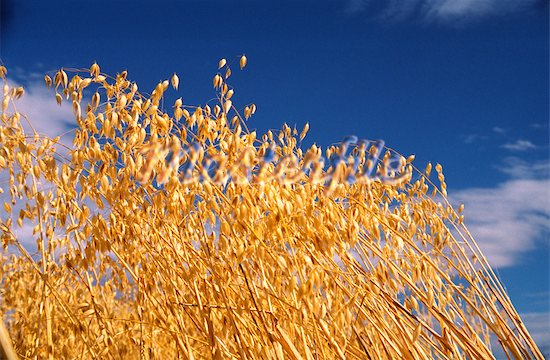
Seven Things I Know About The Harvest

1. The harvest is important to God (Matthew 9:37-38). 

  • Scripture refers to Him as “Lord of the Harvest.”

2.  The harvest is precious; it costs something (Psalms 126:6).

  • They were weeping, and it was considered precious seed because it was the last seed they had in the house.
  • They were going to use it for planting and there would be nothing left.

3. The harvest is promised (John 4:35).

  • The time of harvest is now; already (John 4:35).
  • But there are times that God asks us to wait on the harvest.
  • There is always a time to plant and a time to harvest (Eccl. 3:2).
  • Everything has its season (Eccl. 3:1).
  • We should not be weary in well doing.
  • In due season, we will reap, if we don’t quit (Galatians 6:9).

4. The harvest is by faith (Eccl. 11:1, 4-6).

  • We are not moved by what we see.
  • We are moved by the Word of God, the will of God, and the work of God.
  • We walk by faith, not by sight (2 Corinthians 5:7).
  • We call those things that are not as if they already are (Romans 4:17).
  • If one observes the wind, clouds, or storms he will not sow. Despite the circumstances, sow anyway.
  • Our faith is not in the unknown. It is in the unseen.
  • I know in whom I have believed, and am persuaded that He is able to keep that which I’ve committed (2 Timothy 1:12).

5. The harvest is big (Matthew 9:37-38).

  • God has a big harvest in mind.
  • Again it is promised.
  • Requires harvest-minded workers.

6. The harvest is measurable (Galatians 6:7).

  • It is the law of the harvest.
  • The same measure is used to measure to us again (Luke 6:38).
  • It is considered to be a “good measure.”
  • What we sow, is what we reap; whether good or bad.
  • It isn’t just about money. It is also about souls.

7. The harvest is celebrated (Acts 2:1).

  • The Day of Pentecost was part of the Feast of Pentecost; a harvest celebration.
  • God skillfully and strategically selected such a harvest for the outpouring of the Holy Ghost, and the launching of the New Testament Church.
All I Ever Wanted (Part 2)

Read Part 1

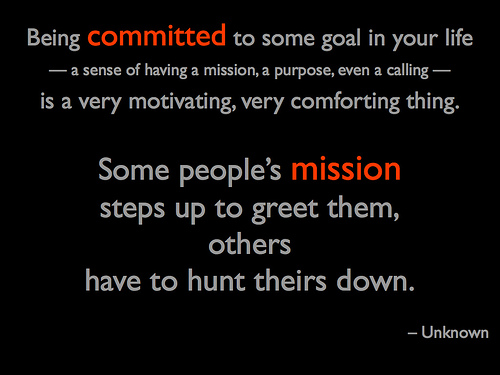
Writer A. W. Tozer said, “A man by his sin may waste himself, which is to waste that which on earth is most like God. That is man’s greatest tragedy and God’s heaviest grief.” God grieves when I waste my split second in eternity and fail to attempt to measure up to my fullest potential in accomplishing His divine plan and purpose. An Arabic proverb teaches that the dawn does not come twice to awaken a person. Opportunity knocks but once. An opportunity missed will eventually bring ample repentance. I have one chance to impact my world.

Photo by ecastro

Someone asked, “How will you spend your life?” Life is a currency. Once spent, it can never be recovered. It is gone, forever, unless you invest it in the afterlife. There, stored treasures are more valuable than hand-held red convertibles that will ruin, rust, and ripple away. No wonder, Jesus said: “Don’t hoard treasure down here where it gets eaten by moths and corroded by rust or — worse! — stolen by burglars. Stockpile treasure in heaven, where it’s safe from moth and rust and burglars. It’s obvious, isn’t it? The place where your treasure is, is the place you will most want to be, and end up being” (Matthew 6:19-21, MSG).

Taking a trip to a mission field, supporting partners in missions, sponsoring missionary projects, praying for missionaries are always needed. Making a difference, storing up treasures in heaven—it’s all I ever wanted!

All I Ever Wanted (Part 1)

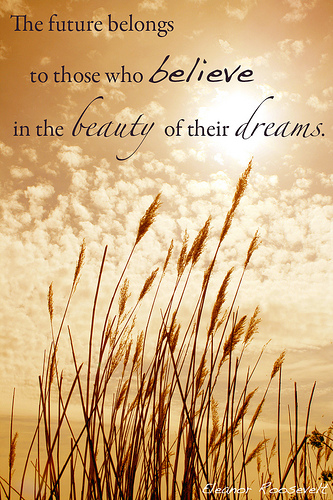
The Nissan Terrano crept, tossing and turning, through the twisting rustic roads. It glided past an Africa village with a dozen or so weather-beaten huts, sporting dried grass covered roofs. The ocean—with rocks protruding and waves crashing—served as its only backdrop. A few scattered sheep scurried for cover at the sound of the approaching vehicle’s engine. A tiny boy, perhaps three or four years old, naked apart from a dirty pair of stained briefs, roused and raced from his perch on a nearby tree trunk. He boldly and briskly ran gleefully towards us. He was all smiles; waving wildly. With his free hand he firmly grasped an unusual, unique treasure; a red convertible car. A real toy; not one fashioned from a discarded tin can. Happily, he extended it toward us; shouting friendly words in his local dialect. He arrested my attention. I longed to understand what he was saying. Interpretation was not a luxury so I imagined. Perhaps, he wanted us, the six foreigners tightly packed in the huge grey machine to know that he had a car too. Or, that he had a dream that one day he would grow up and drive a vehicle similar to ours. I will never really know. Such was my short-lived meeting with a merry miniature visionary. You see, everyone dreams. Everyone wants a better future. This thinking was encapsulated in a billboard I saw today. It pictured a boy playing soccer in his neighborhood. The potent words read, “Twelve-year-old Kofi; nation’s best striker, 2022. Yes, we believe in the future.”

Photo by FindYourSearch

We all believe in the future. Yet, too many meander through life’s twisting roads, tossing and turning, with no direction and—in the end—no enduring legacy. What a tragedy to live and leave without anyone noticing that you ever existed. A Middle Eastern Blessing says, “When you were born, you cried, and the world rejoiced. May you live your life so that when you die, the world will cry, and you will rejoice.”

Dear friends and former leaders in Africa, John Paul and June Hughes sent me these words, in a card, on my 50th birthday: “Just think, you’re here not by chance, but by God’s choosing. His hand formed you and made you the person you are. He compares you to no one else. You are one of a kind. You lack nothing that His grace can’t give you. He has allowed you to be here at this time in history to fulfill His special purpose for this generation” (Roy Lessin). Half a century, and climbing, I still possess a dream to reach our world. My relentless dream is to entrust, empower, and equip the next generation. I still dream of taking God’s Word to the world, touching people, transmitting truth, and transforming nations. I want to teach others so they can reach their own people. It’s all I ever wanted!

The God that Never Sleeps (Part 2)

Part 1

When looking at the future it is easy to think of one word to describe it: “unknown.” I love this famous poem, written by Minnie Louise Harkins and used in the end-of-the-year message of King George VI, in 1939:

I said to the man who stood at the gate of the year
’
Give me a light that I may tread safely into the unknown.’

And he replied,
‘Go into the darkness and put your hand into the hand of God
That shall be to you better than light and safer than a known way!’

So I went forth and finding the Hand of God
Trod gladly into the night
He led me towards the hills
And the breaking of day in the lone east.

So heart be still!
What need our human life to know
If God hath comprehension?

Photo by viking_79

I’m not sure what you may be going through in your field of labor, or what may be taking place in your lives individually, or with your families. Put your hand into the hand of our all-knowing God and walk into the unknown. He is in control. Someone said, “Those that see God’s hand in everything, best leave everything in God’s hand.”

I recall listening to a senior minister earnestly praying. He kept saying, “I put my tiny, little hand into your big, big hand.” How true!

Remember:

God is alive.

God is awake.

God is aware.

God is alert.

God is active.

God is actively pursuing His plan in your life.

He never sleeps!

The God that Never Sleeps (Part 1)

Pick up a newspaper. Tune into a radio station. Surf the Net. Dreary stories are plentiful. The economy plummets. Terrorists provoke panic. Political chaos prevails. Extortionists plunder. Calamities produce pressure. The future is pessimistic. It would be easy to be caught in despair, depression, and desperation. It’s a fact. We live in unsettling times. However there are a couple more facts to remember. God’s Word remains the same. It is forever settled. And, our God never slumbers or sleeps (Psalms 121:4). We can put our confidence in Him and His Word.

Photo by Temari 09

N. McMichael tells this: “A poor woman, as the Eastern story has it, came to the Sultan one day, and asked compensation for the loss of some property. ‘How did you lose it?’ said the monarch. ‘I fell asleep,’ was the reply, ‘and a robber entered my dwelling.’ ‘Why did you fall asleep?’ ‘I fell asleep because I believed that you were awake.’ The Sultan was so much delighted with the answer that he ordered her loss to be made up. But what is true, only by a legal fiction, of human governments, that they never sleep, is true in the most absolute sense with reference to the Divine government. We can sleep in safety, because our God is ever awake. We are safe, because He never slumbers.”

Henry Wadsworth Longfellow wrote:

And in despair I bowed my head
“There is no peace on earth,” I said,
“For hate is strong and mocks the song
Of peace on earth, good will to men.”

Then pealed the bells more loud and deep:

“God is not dead, nor doth He sleep;

The wrong shall fail, the right prevail
With peace on earth, good will to men.”

Longfellow wrote those dreary words while grieving the loss of his wife in a tragic fire, and after hearing the news that his son, Charles, had been severely wounded in the Civil War. It was a distinct possibility his son would never make it home alive. In despair he pinned his poem. Later it became a Christmas carol, recently revived and made popular by “Casting Crowns.” The words illustrate our undeniable and unwavering faith in the Almighty, all-seeing God; trusted by both you and me.

To Be Continued…